Looking at Ian Hodder’s Book (2024) “Entangled.” (Part 1 of 22)
0001 The full title of the Work before me is Entangled: A New Archaeology of the Relationships between Humans and Things (Second Edition). The author is emeritus professor at Stanford University, California, and affiliated with the And Koc University in Istanbul, Turkey. The publisher is Wiley Blackwell (Hoboken, New Jersey). The identifier is ISBN 978 111 985 5866 (paperback).
0002 The first edition is published in 2016 and titled Studies in Human-Thing Entanglement, which is quickly followed in 2018, with Where are We Heading: The Evolution of Humans and Things (Yale University Press). This boost is examined in Razie Mah’s blog (June 30 to 16, 2023, Looking at Ian Hodder’s Book (2023) “Where We Are Heading”).
0003 The second edition (2024) involves a significant rewrite. The topic is the same, but the emphasis changes. The change is captured in the title of the first chapter, “Thinking about Things Differently (from Things to Flows)”.
0004 Section 1 of chapter 1 (S1C1) starts with the question, “What is a thing?”
For me, the question is addressed in a recent article by Mariusz Tabaczek, eliciting a response by a capable semiotician, who posted a draft in the website academia.edu titled Response to Mariusz Tabaczek’s Article (2025) “Contemporary and Classical Versions of Hylomorphism”.
0005 The response relies on the definition of “entanglement” developed in Razie Mah’s blog in December, 2025, titled Looking at Igor Pilshchikov and Mikhail Trunin’s Article (2016) “The Tartu-Moscow School of Semiotics”.
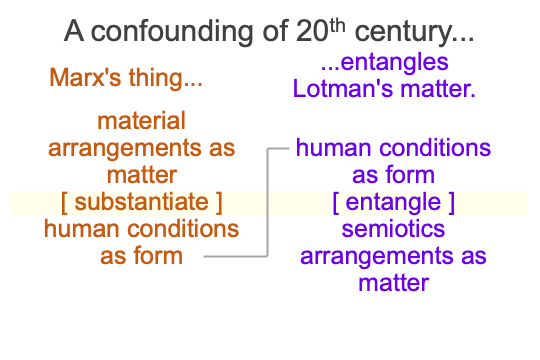
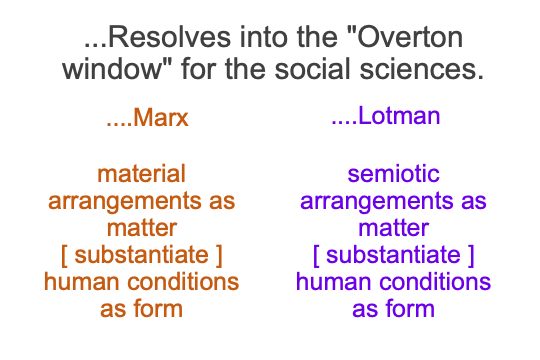
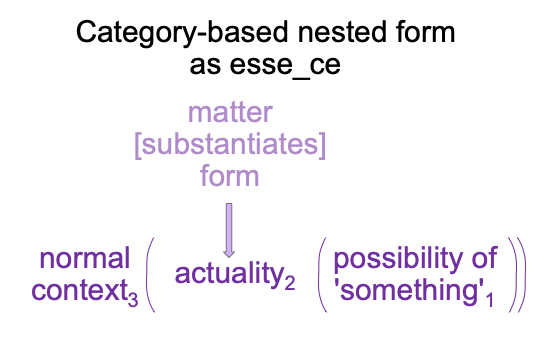
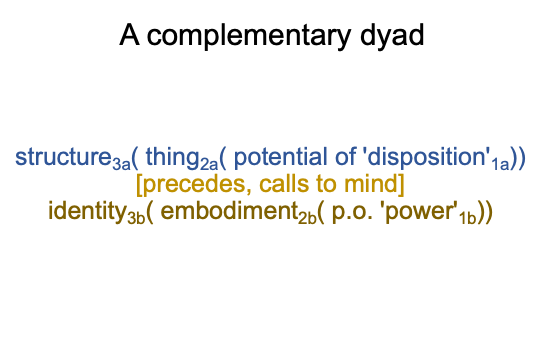
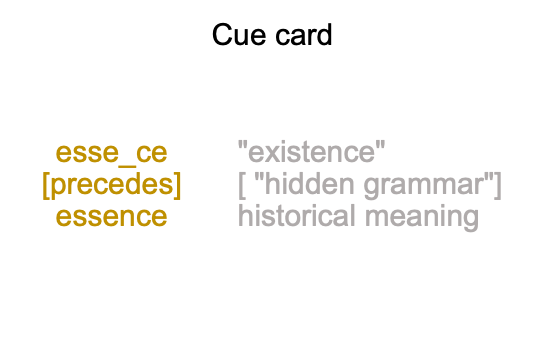
0006 The term, “entanglement” stands like a mirror of the term, “substantiation”, thereby confounding the structure of Peirce’s category of secondness.
I will explain in the following points. For further introduction, consult Razie Mah’s e-works, A Primer on the Category-Based Nested Form and A Primer on Sensible and Social Construction.
0007 What is a thing?
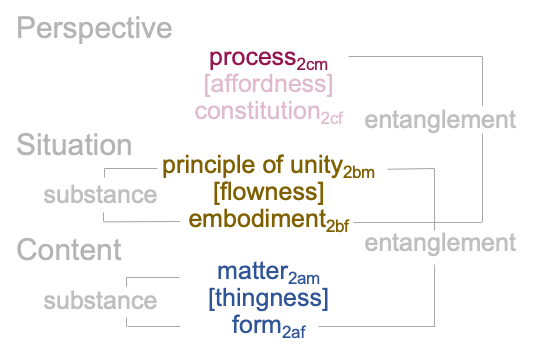
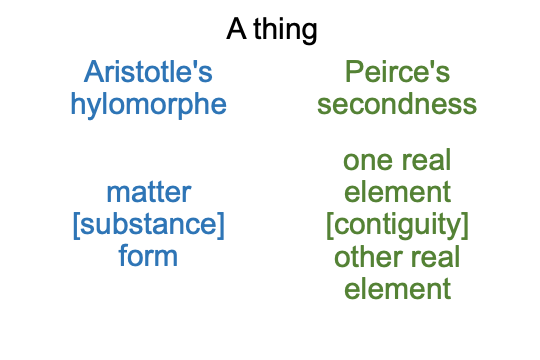
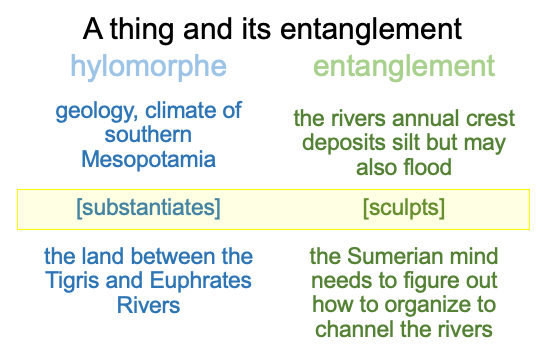
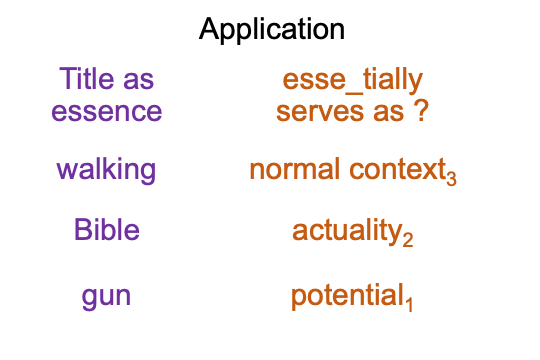
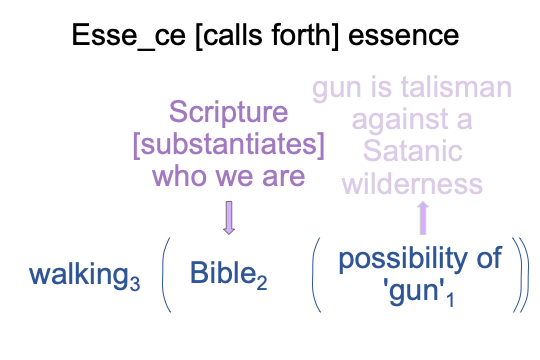
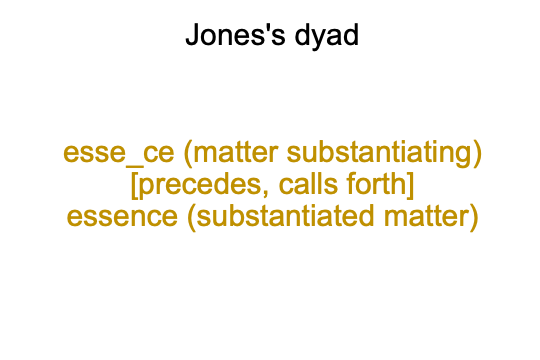
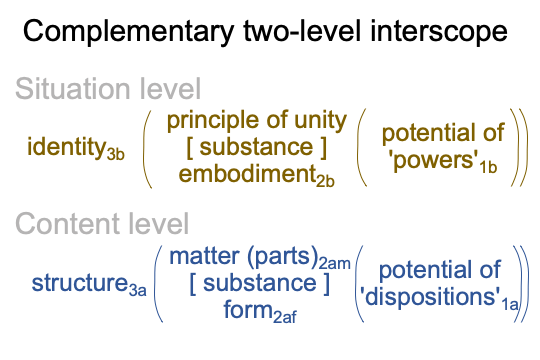
According to Aristotle, the first step in natural philosophy is to regard a thing as matter [and] form. The brackets are there for a reason. Aristotle’s hylomorphe (hylo = “matter”, morphe = “form”) is an exemplar of Peirce’s category of secondness. Secondness consists of two contiguous real elements. For Aristotle’s hylomorphe, the real elements are matter and form. The contiguity, [and], is hardly adequate. So, Razie Mah purloins the much-abused term, “substance”, to replace the conjunction.
0008 Here is the result.
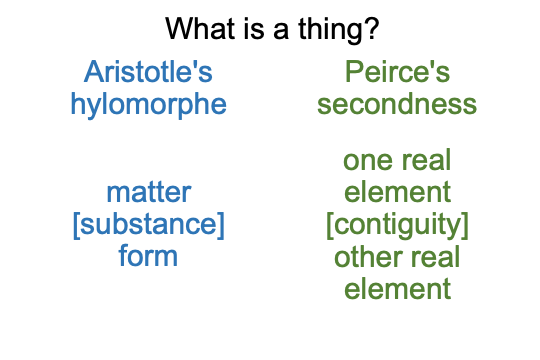
0009 Of course, the use of the word, “substance” (a noun), as the label for the contiguity between matter and form may be regarded as controversial. However, the act only adds a technical definition to an already discarded label. Modern thinkers have no idea what the term originally means, so they are convinced that whatever meaning that a modern assigns must be appropriate. “Substance” means whatever a modern says that it means.
What a message.
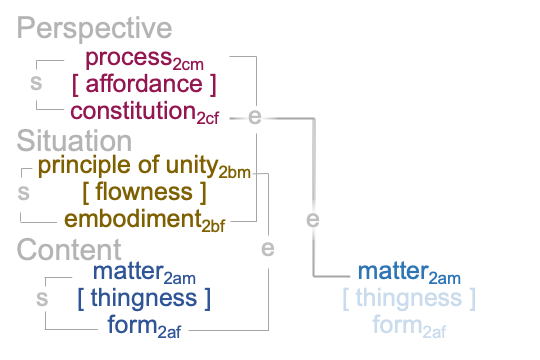
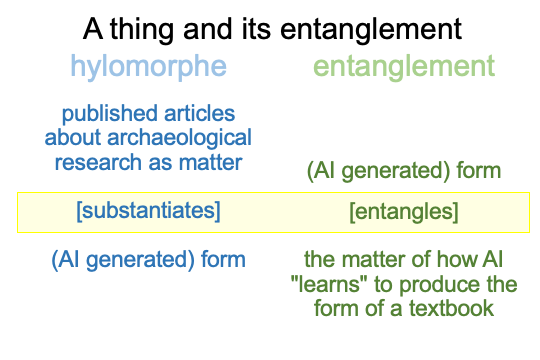
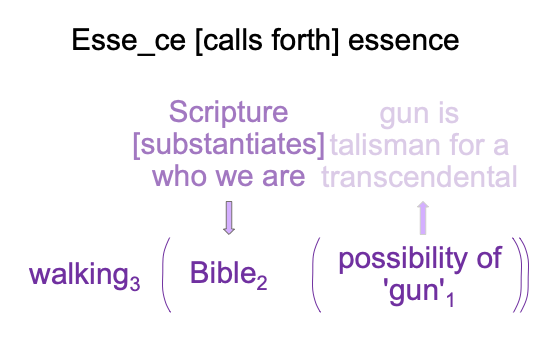
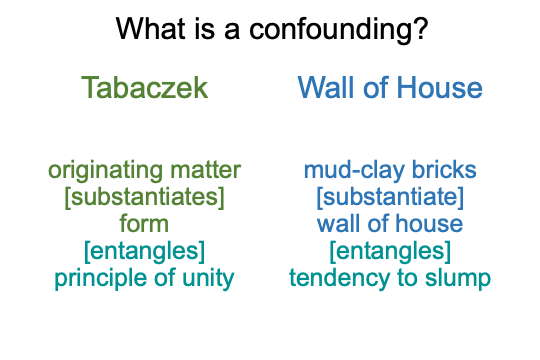
0010 The idea of entanglement comes up, because, once matter [substantiates] form, then the form may get entangled with other matter. The thing remains a thing, but now other matter becomes apparent. For Tabaczek’s review of contemporary commentaries on Aristotle’s hylomorphe, certain philosophers say that the form entangles a principle of unity.
A principle of unity becomes the entangled matter.
0011 Here is a picture.
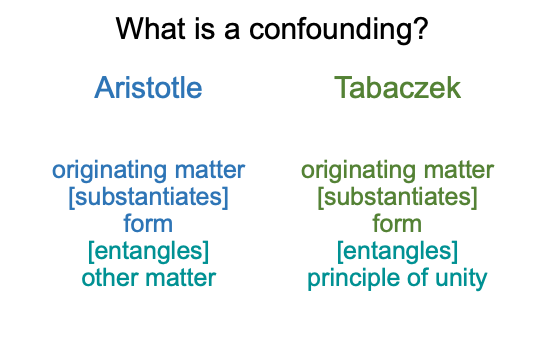
0012 This principle of unity allows the person to regard the form as a hole… I mean, whole… as in holistically.
One might think that a principle of unity does not constitute matter. But, has that thinker ever framed a picture? That frame is confounding.
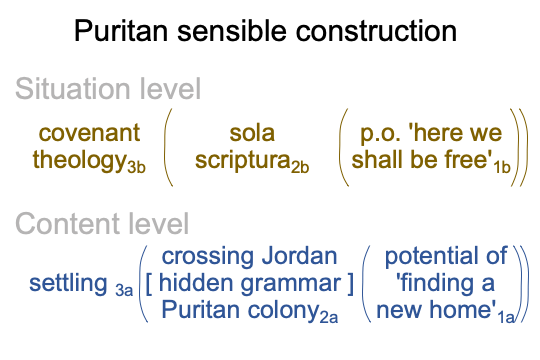
0013 Another example is found in Hodder’s research fieldwork.
Long long ago, the inhabitants of Catal Hoyuk (the anglicized version of a Turkish label) frequently plaster their walls as a solution to the undesired habits of mud-clay bricks. They tend to slump. Plaster helps control the loss of integrity that slumping entangles.
Here is a diagram.
0014 Happily, plastering the walls solved other issues as well. The text explains.