Looking at Jess Beck, et al.’s Article (2026) “Changing the Landscape of Archaeological Publishing” (Part 4 of 20)
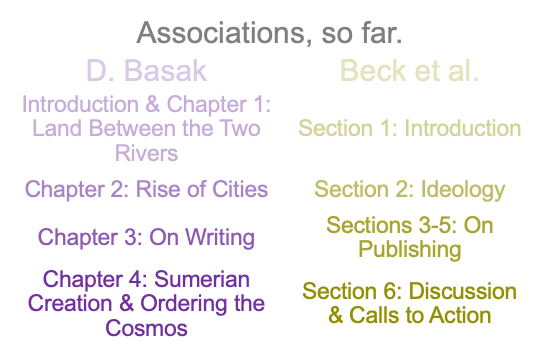
0044 Chapter 3 of Dr. D. Basak’s book concerns the invention of writing.
A grand cognitive leap takes three steps (E, F and G).
0045 At first (E), cuneiform ideograms, incised onto carefully prepared clay tablets, reported transactions, not unlike journal papers. Indeed, some early modern journals take the label “transactions”, such as the “Transactions of the Philological Society”. An ideogram presents an icon of its referent.
0046 According to Charles Peirce (1839-1914), an “icon” is a sign-relation whose sign-object is based on the principle of similarity, imagery and so forth. An “index” is a sign-relation whose sign-object is based on the principle of contiguity, pointing, indication and so forth. A “symbol” is a sign-relation whose sign-object is based on the principle of habit, convention, rules, law and so forth.
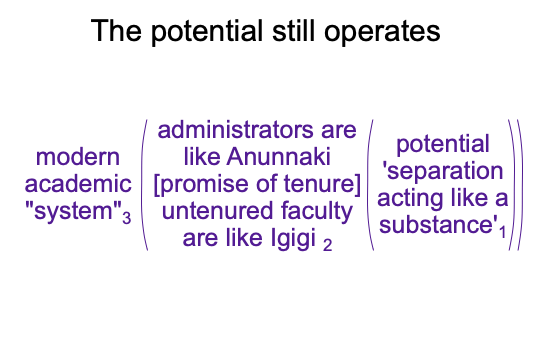
0047 Later (F), the ideograms become indexes for spoken-word sounds. In comparison, journal publications become indexes of scholarly productivity to academic deans, whose appointments represent an elite standing above the tenured (or tenure-track) scholar.
0048 Beck et al.’s sections 3, 4 and 5 (Publishing Dynamics in North America, Publishing Pathways, and Publishing Dynamics in Latin America) discuss the transition from journal article as an icon (of research content) to an index (of academic productivity).
Was the transition inevitable?
Once the bureaucrat (like the cuneiform-writing scribe) realizes the indexal principle, then there is no return to the original configuration. Journal articles as indexes usurp (maybe, “re-organize”) journal articles as icons. Rules and guidelines abound in the use of indexes to grant tenure.
Finally (G), the icon and index are repackaged as a symbol representing a public good.
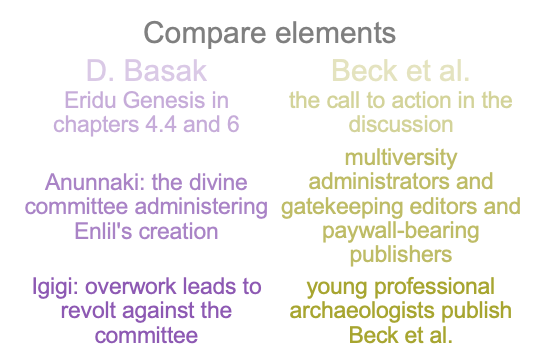
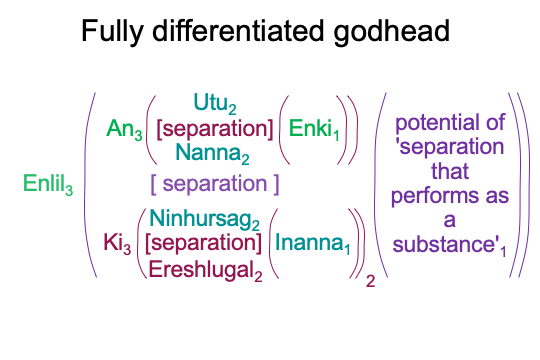
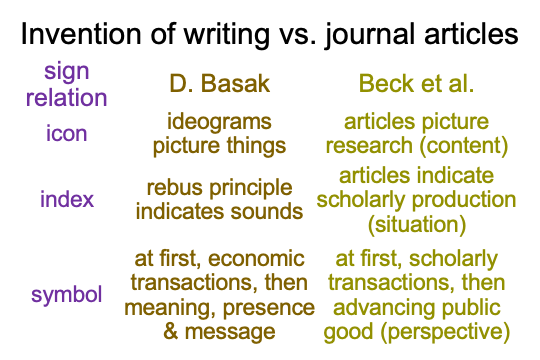
0049 Here is a diagram.
0050 Surely, the above comparison is not so far fetched.
The comparison says that both cuneiform and journal articles pass through distinct historical unfoldings. First and foremost, they are pictures of content. Then, they become indications, bound by rules and guidelines. Finally, these pictures (meanings) and indicators (presences) support a symbol (message). The unfolding engages content, situation and perspective.
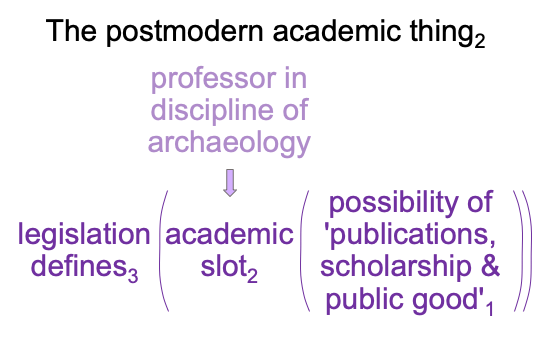
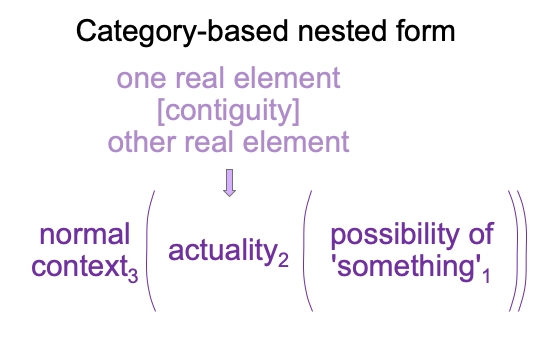
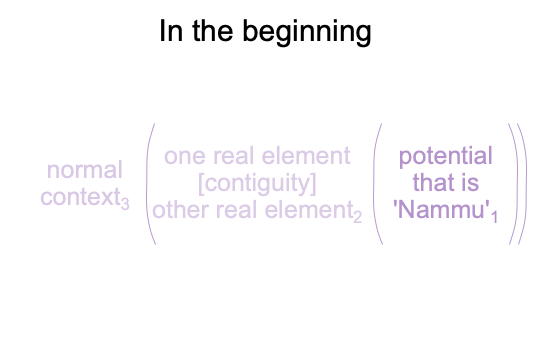
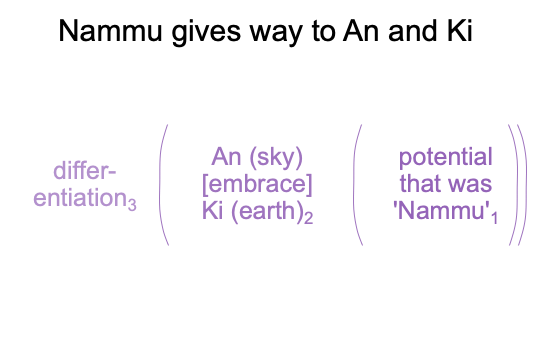
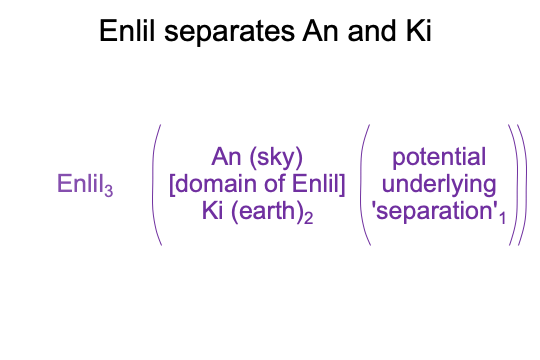
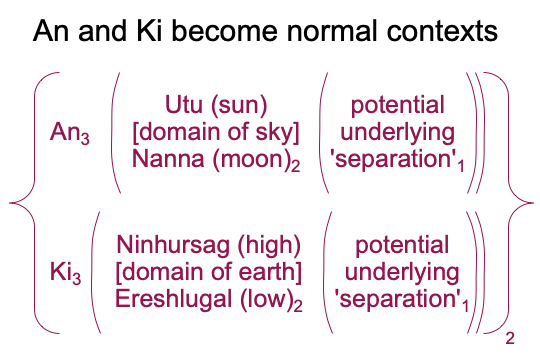
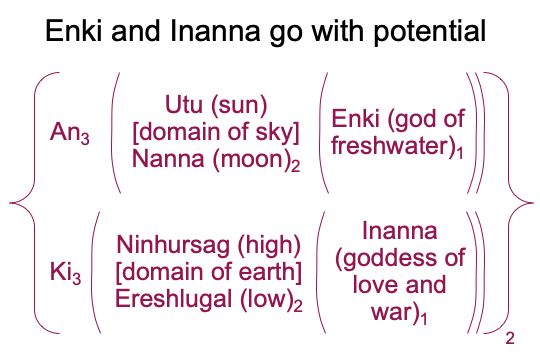
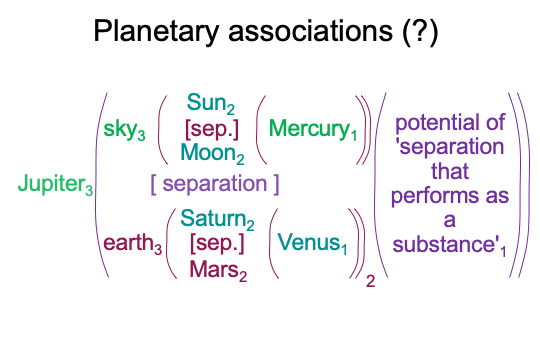
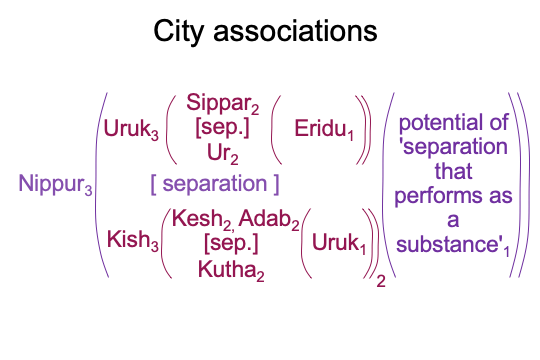
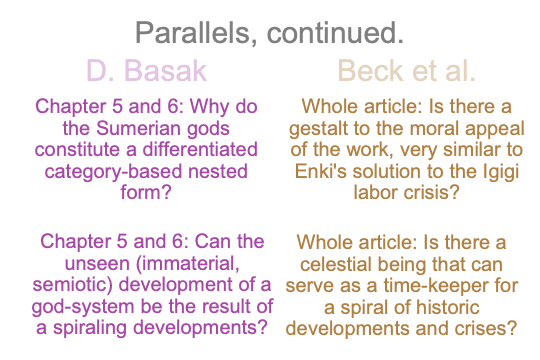
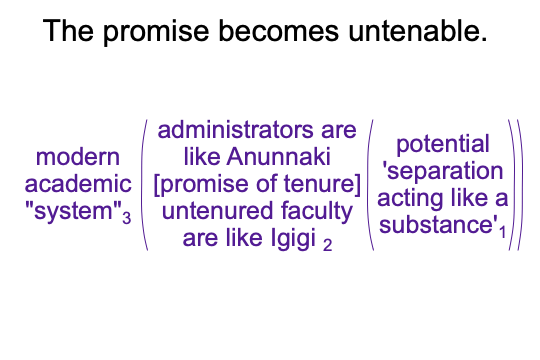
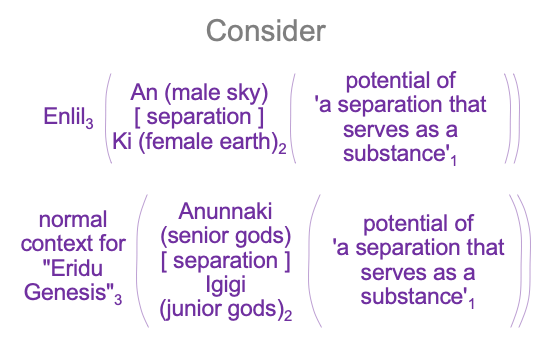
0051 The progression calls to my mind the category-based nested form corresponding to the definition of a spoken word, as presented at the opening of Razie Mah’s e-book, How To Define The Word “Religion”.
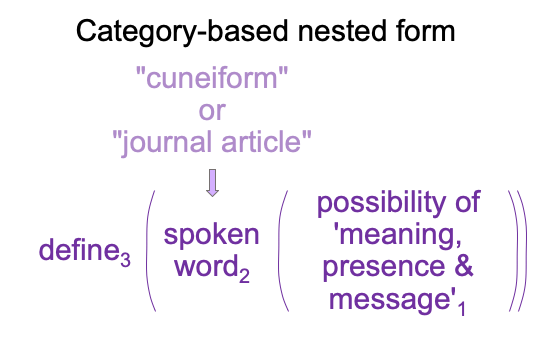
The normal context of definition3 brings the actuality of a spoken word2 into relation with the potential of ‘meaning (content), presence (situation) and message (perspective)’1.
0052 For chapter 3 of Dr. D. Basak’s book, the spoken term2 is “cuneiform writing”.
For sections 3, 4 and 5 of Beck et al., the spoken term2 is “journal article”.
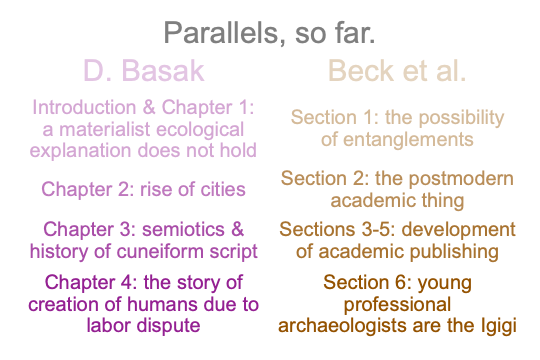
0053 The comparison between the early chapters of a (potentially AI-generated) book and a cry from the heart of professional archaeologists early in their careers tells me that the emergence of new specializations during the Ubaid, Uruk and Early Dynastic periods in Sumer are similar to the historical emergence of professional archaeologists in modernity.
0054 I wonder whether the emergence of civilization in the land between the rivers millennia ago is really due to the opportunities and the dangers of the Tigris and Euphrates Rivers.
Could it be due to a dynamic still unfolding in history in the present day?
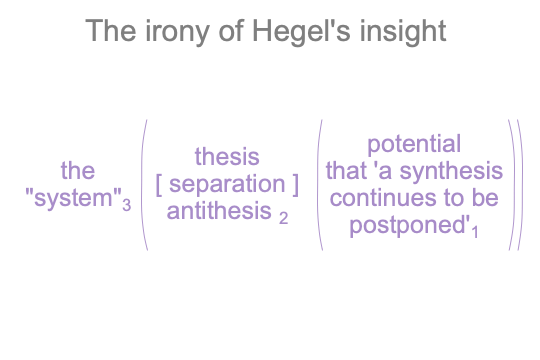
0055 Consider the two confoundings that seem to be embedded within the potential that underlies a definition of a spoken term1.
I take Basak’s treatment of cuneiform as the example. The reader can translate this into Beck et al.’s treatment of journal articles.
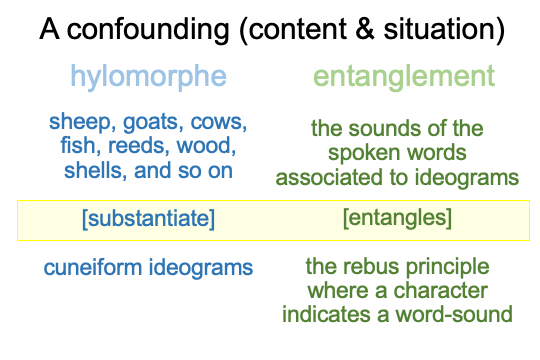
0056 A first confounding will resolve into the content and the situation levels of an interscope (a category-based nested form composed of category-based nested forms).
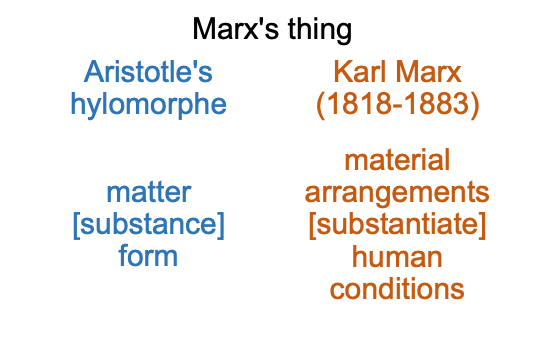
For the following hylomorphe, various things (as matter) substantiate cuneiform ideograms (as form). At the same time, the spoken words associated to the names of things (as form) entangle the rebus principle (as matter).
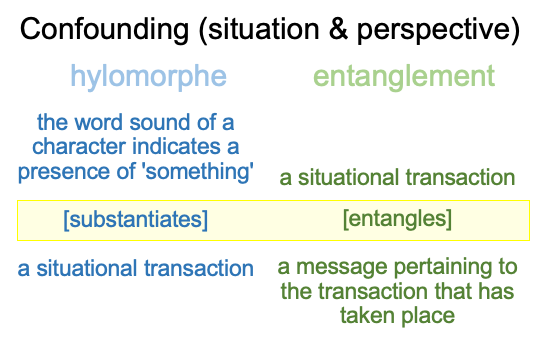
0057 A second confounding will resolve into the situation and the perspective levels of an interscope.
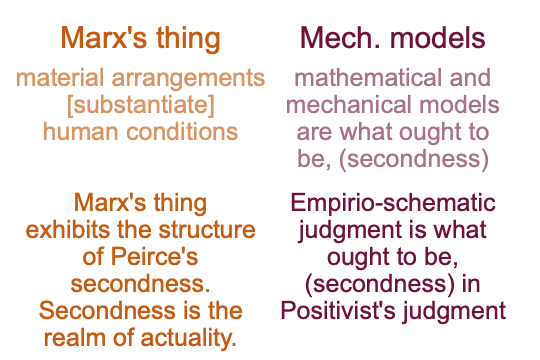
Again, the hylomorphe corresponds to the two real elements that characterize Peirce’s category of secondness.
For the following hylomorphe, the word-sound (in speech-alone talk) indicates the presence of ‘something’ (as matter) that substantiates the situation realness of a transaction (as form). Spoken words as content that are expected to be situated as transactions. Then, that situation-based transaction (as form) entangles a perspective-based message pertaining to the transaction that has taken place (as matter).
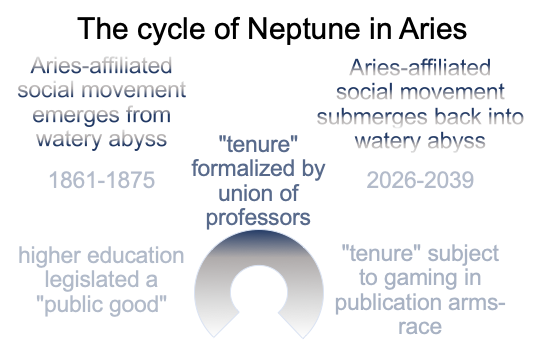
0058 For Beck et al. these confoundings indicate how vulnerable their occupations are, given what is stated in their own article. Not only are young experts in archaeology being crushed by competition within their own disciple (a publication arms-race corresponds to the situational transaction), but they also face the challenges of a new technology (represented by an individual or a special-interest using AI) that may harvest their articles in the privatization of a “public good”.