Looking at Kalevi Kull and Ekaterina Velmezova’s Book (2025) “Sphere of Understanding” (Part 2 of 3)
SaH 0017 The authors quest for a sphere of understanding. They seek the egg, so to speak, impregnated by Juri Lotman’s genius. In the interviews in chapter 2.1, Lotman is spent, although still alive. He is old. The interviewer is a youth, a personification of the metaphysical love-child born after Slavic civilization reveals herself to Lotman’s circumspection.
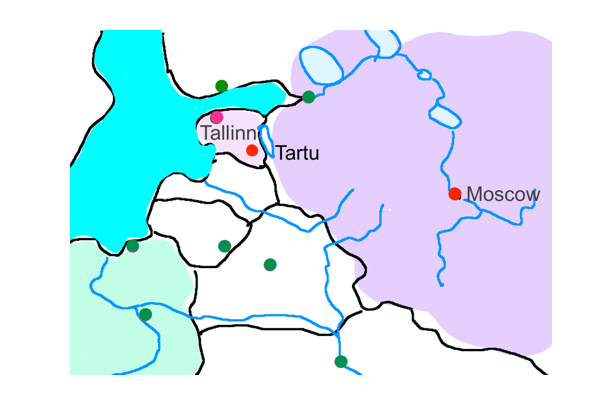
0018 The miracle of Lotman’s arrival in Estonia is, weirdly, recounted in the last interview (2.14) with psychologist and cultural theorist, Jaan Valsiner. As it turns out, Valsiner’s step-father was instrumental in getting Juri Lotman to Estonia after the Second World War.
0019 Jaan Valsiner demonstrates that the Tartu-Moscow’s sphere of influence is diffuse. His testimony is seconded by Paul Cobley (2.13), Terrence Deacon (2.12), Jesper Hoffmeyer (2.11) and Stuart Kauffman (2.10).
0020 The sphere becomes less diffuse in interviews with Roland Posner (2.9), Gunther Kress (2.8) and Wilfred Noth (2.7).
Notably, Noth conducts a discourse on the crucial potential of truth, as opposed to the potential of will. Indeed, the contrast between truth and will turns out to be integral to my examination of a 2017 article on Russian identity.
0021 Finally, the sphere becomes tangible with interviews with American anthropologist, Myrdene Anderson (2.6), who researched indigenous people in Sweden, Italian semiotician Paolo Fabbri (2.5), who railed against the wooly thinking that passes for “models” in contemporary humanities, and the Italian know-it-all Umberto Eco, who noted the importance of iconicity in semiotic humanity.
What?
“Semiotic humanity”?
What about semiology?
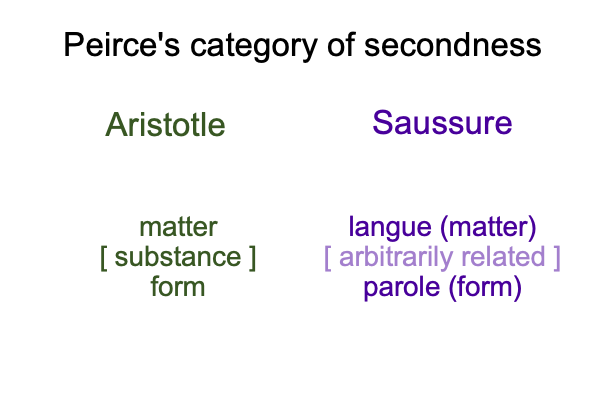
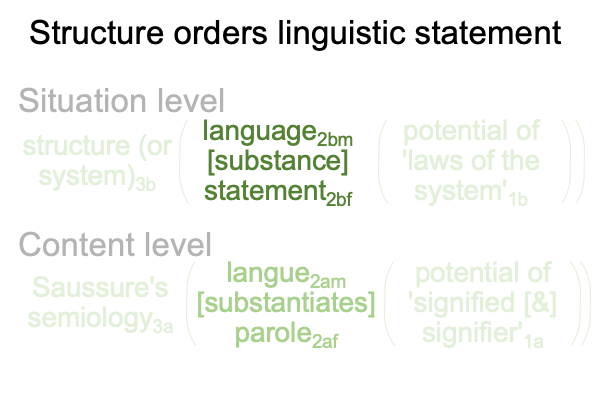
0022 Contemporary academic discourse is currently conducted with expert-coined spoken words, but these utterancescannot picture or point to their referents. Academics swim in a pool of differences… er… two arbitrarily related pools of differences. No one can tell where he or she flotates.
Flotates?
This is what happens when spoken words are placeholders in two arbitrarily related systems of differences.
0023 Finally, the interviews engage a still-living member of the original Tartu-Moscow School of Semiotics, Boris Uspenskij (2.2). This interview gets a full examination in the course on Semiotics and History. Uspenskij stands within the sphere that the authors aspire to understand.
0024 So, what does Razie Mah’s contribution under the banner of Semiotics and History offer?
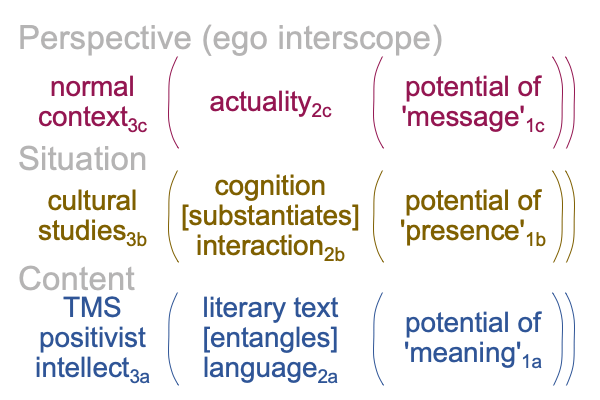
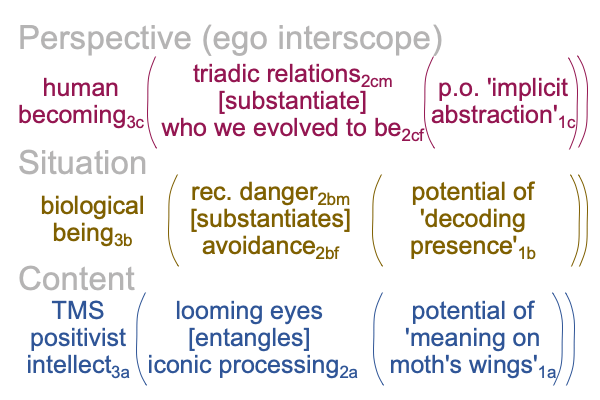
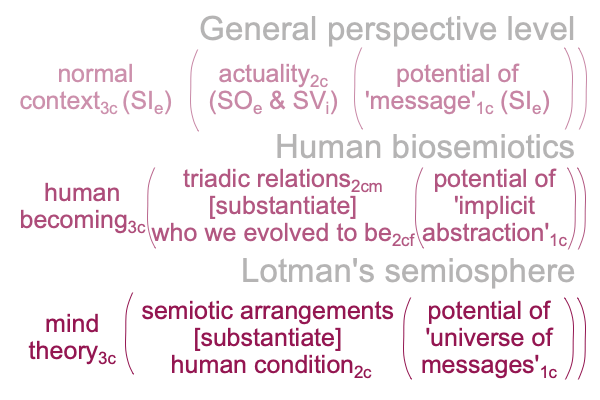
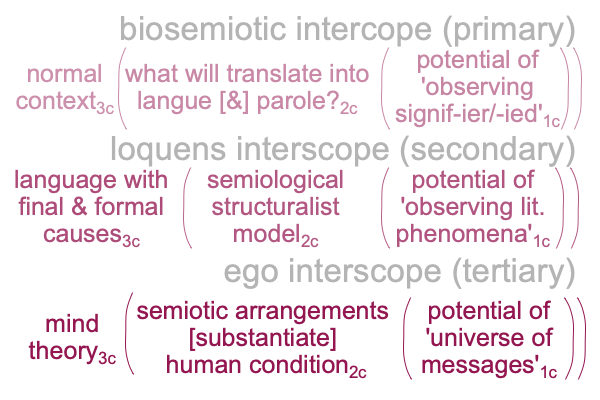
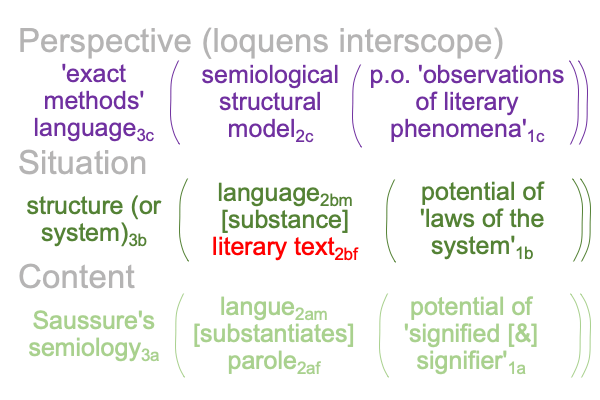
0025 For the diffuse sphere, these examinations will present a historical narrative of ideas in the style of diagrams of purely relational structures. In short, Peirce-inspired diagrams offer a new way to narrate intellectual history.
0026 For the almost tangible sphere, these examinations practice a method of association, followed by a discussion of the implications. The articles provide material to fill in the empty slots of relational structures. When associations are made, implications become apparent.
0027 For the sphere itself, one unexpected insight is that, as the first ascendant of the Tartu-Moscow School of Semiotics struggles to fulfill the political mandate of the USSR (to make all fields of inquiry “scientific”), the researchers excavate the recently-buried remains of the civilization that is their subject of inquiry.
Imagine a scientific investigation of Russian language, history and literature, as a archaeological excavation into the being of Slavic civilization.
0028 Is that the same “she” that… um… you know… captured the attention of Juri Lotman?
How confounding.
0029 The next blog offers an introduction to Semiotics and History: The Tartu-Moscow School of Semiotics.