Looking at Jess Beck, et al.’s Article (2026) “Changing the Landscape of Archaeological Publishing” (Part 5 of 20)
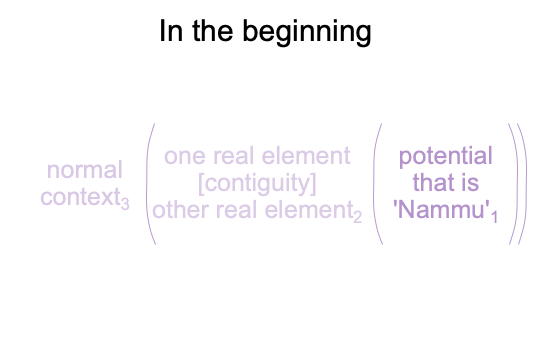
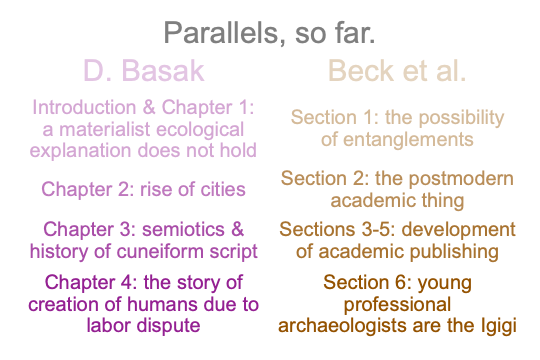
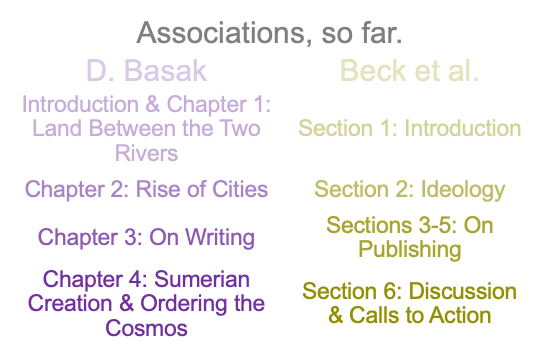
0059 Chapter 4 of Dr. D. Basak’s book is titled, “In the Beginning: Sumerian Creation and the Ordering of the Cosmos”.
Section 6 of Beck et al. is titled, “Discussion”. This section contains calls for action.
0060 So far, I have drawn the first three comparisons. I am about to consider the fourth.
0061 In the discussion, Beck et al. note that demands for ever-increasing academic productivity yield decreasing research quality and professional satisfaction. A system founded on uncompensated labor is not inevitable, sustainable or effectual. A re-alignment is necessary.
Basak’s chapter 4.4 reports on an amazing cuneiform tablet found in 1893 in the holy city of Nippur by an expedition from the University of Pennsylvania. Translated in 1912 by Assyriologist Arno Poebel (1881-1958), the story is now called “The Eridu Genesis”. The cuneiform dates to around 1600 BCE. But, the oral tradition is undoubtedly older.
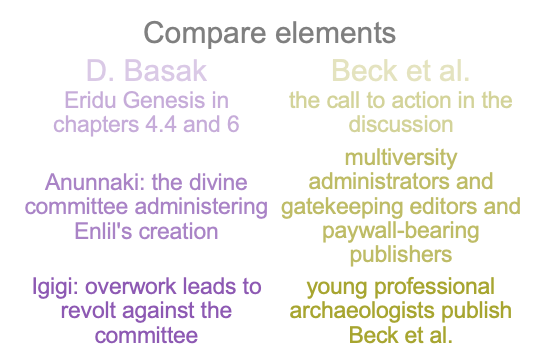
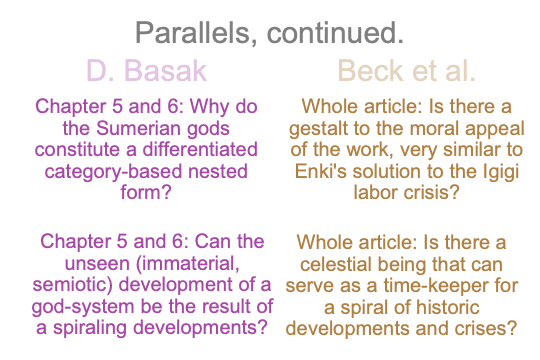
0062 The Eridu Genesis frames the creation of humanity as a clever solution to a labor dispute among the gods. The topic is covered in chapters 4 and 6 of Basak’s text.
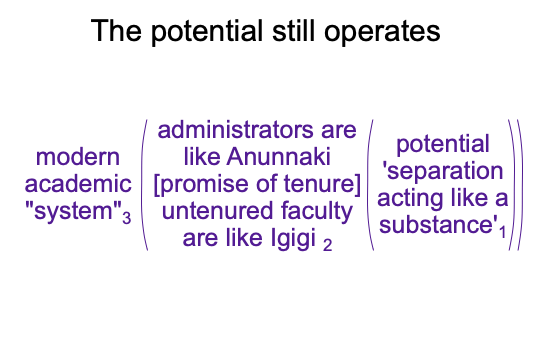
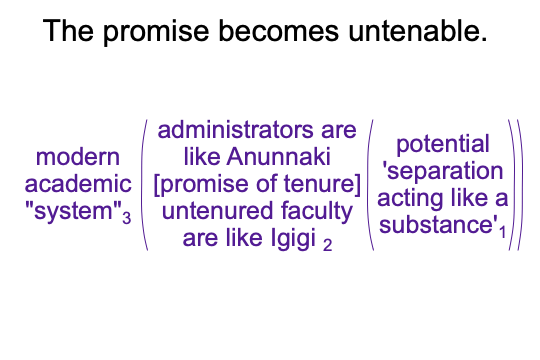
0063 The senior gods (the Anunnaki, but also administrators of postmodern universities) and the junior gods (the Igigi, but also the post-docs, visiting professors, instructors, and tenure-track faculty) are not getting along. The Igigi are tasked with the maintenance of the cosmos (or one discipline in a multiversity). They are overworked (in precisely the same manner as early-career professional archaeologists).
The Igigi rebel.
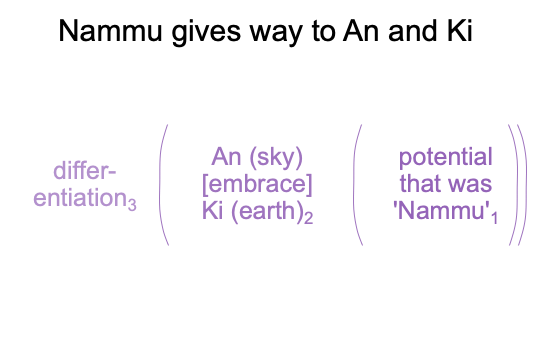
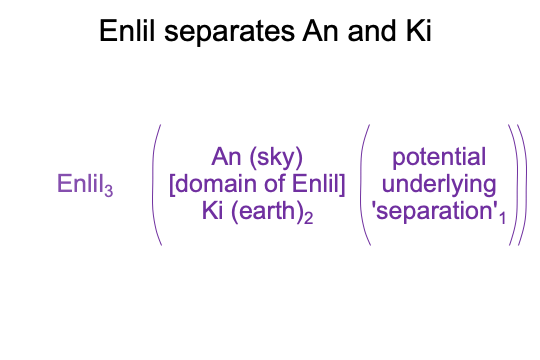
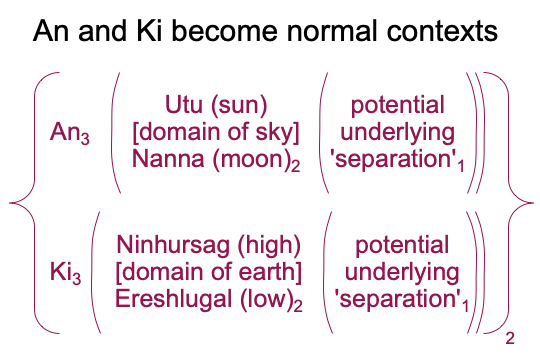
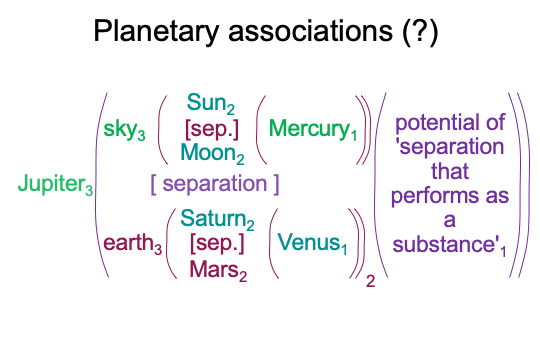
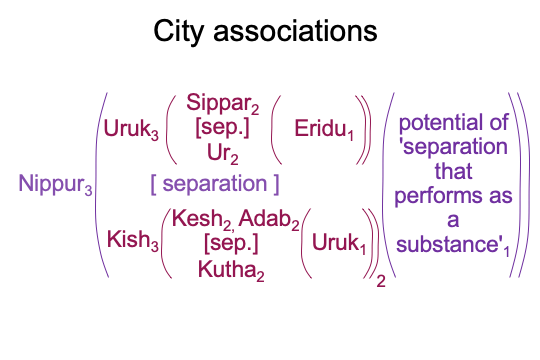
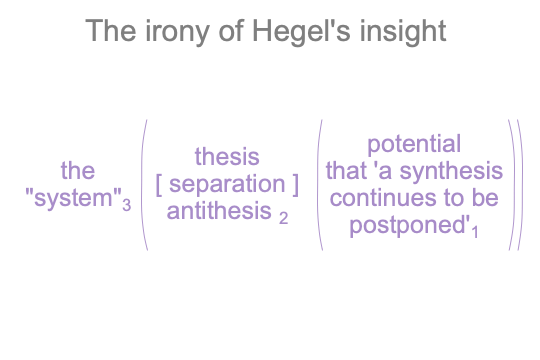
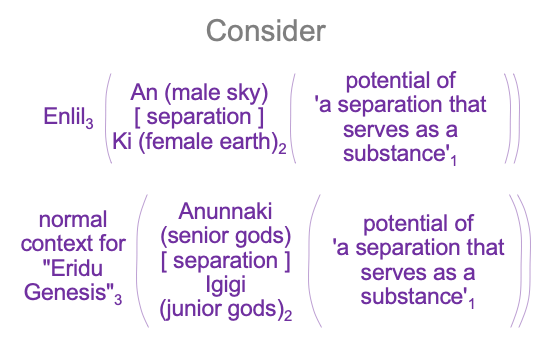
0064 The labor dispute ends up locking down Enlil’s cosmos (multiversity). Enlil is the god of the storm. The present cosmos is created when Enlil separates his father (An, the sky) and his mother (Ki, the earth) and establishes his own jurisdiction (the air).
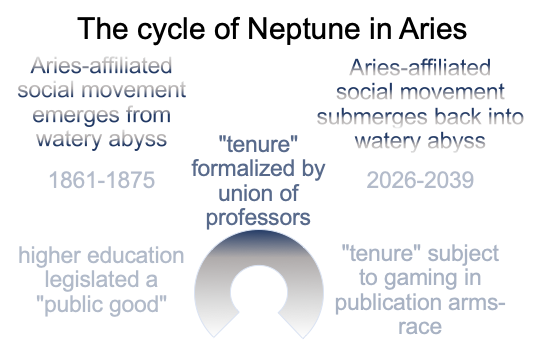
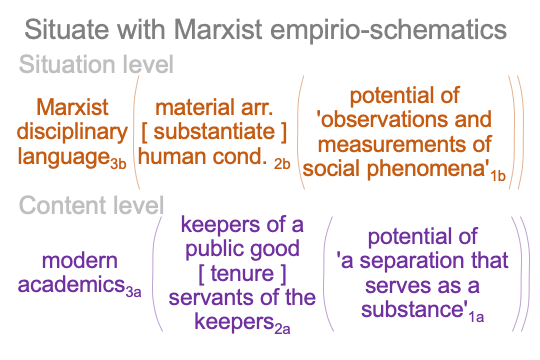
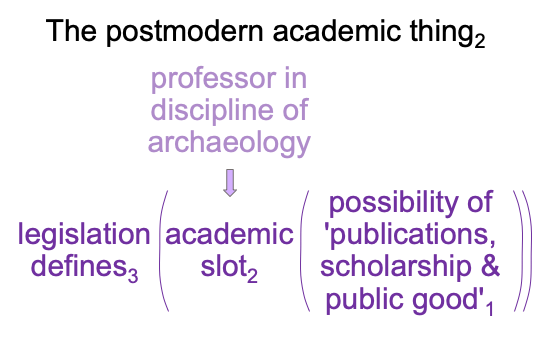
I suppose that the Igigi come around to fill in the empty slots created by Enlil’s system, just as scholars filled in the academic slots created by the post-1848 and land-grant universities. These are the universities that situate the potential of ‘public good’.
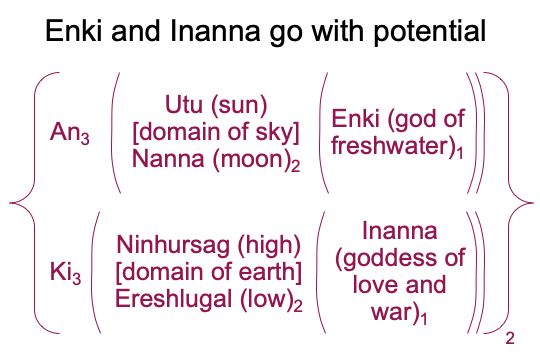
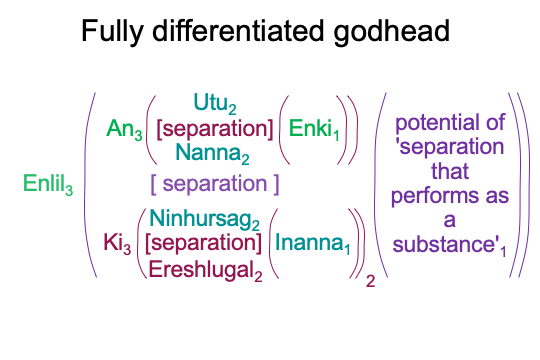
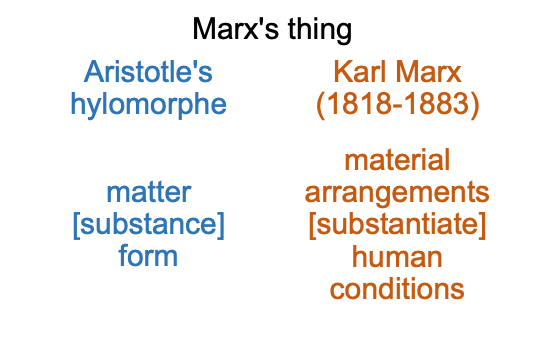
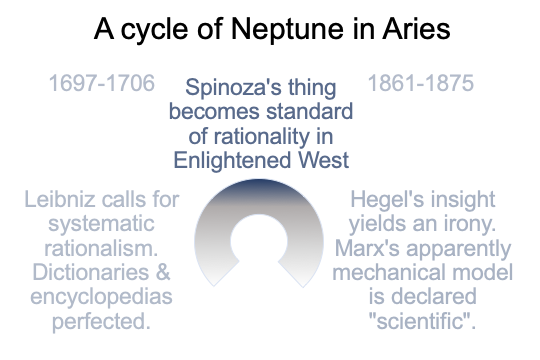
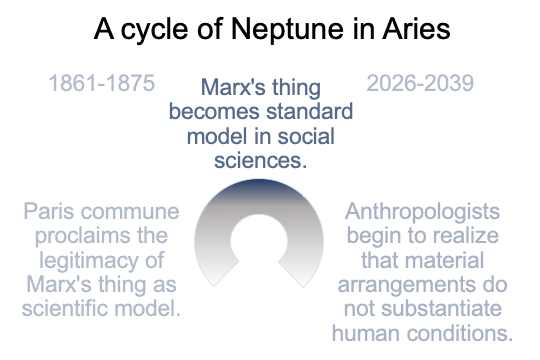
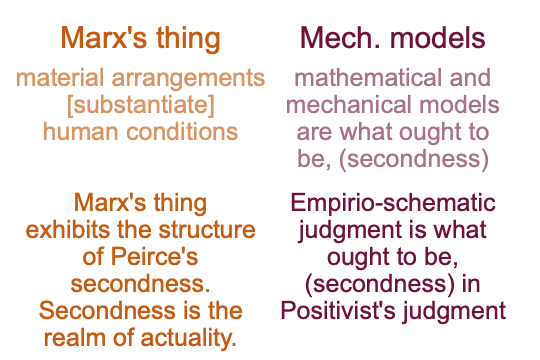
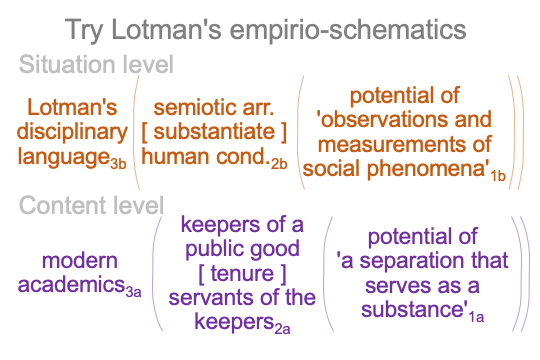
0065 Here is a picture.
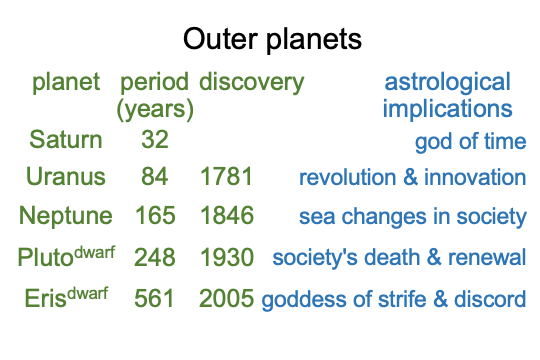
0066 Around one orbit of Neptune later (165 years), young professional archaeologists are the Igigi. University administrators and publishing houses are the Anunnaki. The solution in the Sumerian myth comes from Enki’s suggestion that the gods fashion humans in order to do the Igigi’s work. Then, the Igigi can rest on their laurels (sort of like tenured faculty) while the humans do all the labor required to keep Enlil’s cosmos working properly.
0067 Enki is the god of subterranean flows, especially spring water. Whenever fresh water flows, Enki is present. So, Enki is in the annual crests of the rivers and in the canals and dikes that control these turbulent flows. Enki is in the freshwater springs that can be found in brackish waters. After rains fall on distant mountains, the waters enter Enki’s domains.
0068 Humans are created to do the work of the overtaxed Igigi.
0068 Who is going to be created to do the work of the over-burdened young professional archaeologists?
A clue comes from the elaborate Table 3, consisting of one and one-third pages, in Beck et al.’s discussion. The table covers the potential consequences of three levels of engagement between a researcher and mass media.
0070 If the labor problem concerns the difficulties for advancement that arise when young archaeologists are compelled to publish in peer-reviewed journals that restrict public views behind a paywall, then a new specialization (corresponding to the creatures that Enki proposes to ease the working conditions of the Igigi who are compelled to satisfy the administrating Anunnaki) should be fashioned out of clay from the Abzu, the primordial freshwater abyss of opportunity in a world of unconstrained social complexity.
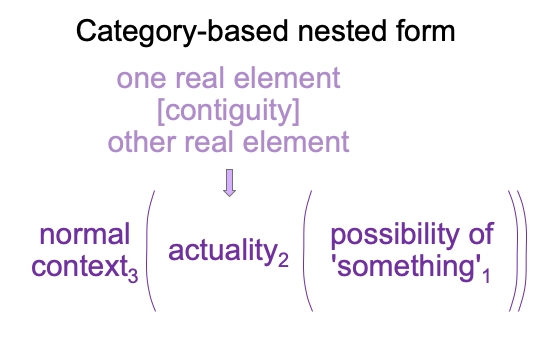
0071 Always read paragraphs by ignoring the parentheses, then consider the same paragraph with the parenthetical statements.
0072 In this fusion of ancient and postmodern solutions, Ninmah (an earth goddess) shapes a figure, using a creative mold, corresponding to the new human who will bear the burden of the Igigi’s difficulties.
Who are these humans?
0073 In the Sumerian myth, the humans who are created to do the work of the Igigi are called “lullu”.
For the postmodern version, can the reader guess who the lullu are?
Check out my podcast on Rumble.