04/5/22

Looking at John Perez Vargas, Johan Nieto Bravo and Juan Santamaria Rodriguez’s Essay (2020) “Hermeneutics and Phenomenology in… Social Sciences Research” (Part 17 of 18)

0062 Can a situation-level hermeneutics3b apply to the social sciences3a in the same way that phenomenology3b virtually situates the natural sciences3a?

If John Jiaro Perez Vargas, Johan Andres Nieto Bravo and Juan Esteban Santamaria Rodriguez are correct, then hermeneutical methods2b may situate these social empirio-schematic judgments2a.

0063 Yet, it is unlikely that these social sciences2a will acquiesce to the potential of interpretation1b.

First, the rule of the positivist intellect3a remains, even though compromised by an originating phenomenological intervention.

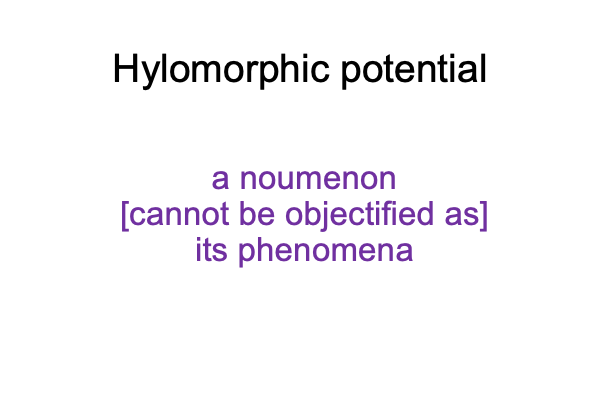
Second, hermeneutical reduction2b interrogates the noumenon1a(1b)the intersubjective being1b that conditions the consensus3a that performs empirio-schematic inquiry2a, threatening to reveal the phenomenologically generated nature of what is taken to be mind independent1a(1b).

04/4/22

Looking at John Perez Vargas, Johan Nieto Bravo and Juan Santamaria Rodriguez’s Essay (2020) “Hermeneutics and Phenomenology in… Social Sciences Research” (Part 18 of 18)

0064 So concludes this examination of an article published by three enterprising faculty at the Universidad Santo Tomas, Columbia.  The full title of their article is, “Hermeneutics and Phenomenology in Human and Social Sciences Research”.  The article is found in Civilizar: Cienceas Sociales y Humanas (volume 20(38), 2020, 137 to 146, DOI: https//doi.org/10.22518/jour.ccsh./2020.1a10).  Again, I thank the authors for presenting in English.

0065 This article serves as a testing ground for arguments raised in prior reveries and commentaries on articles concerning phenomenology.

0066 The e-works, available at smashwords and other electronic e-book vendors, belong to the series, Phenomenology and the Positivist Intellect.  They are here listed, along with this examination, which appears in April 2022 in the blog at www.raziemah.com.

Reverie on Mark Spencer’s Essay (2021) “The Many Phenomenological Reductions”

Comments on Joseph Trabbic’s Essay (2021) “Jean-Luc Marion and … First Philosophy”

Comments on Richard Colledge’s Essay (2021) “Thomism and Contemporary Phenomenology”

Comments on Jack Reynolds’ Book (2018) “Phenomenology, Naturalism and Science”

Looking at John Perez Vargas, Johan Nieto Bravo and Juan Santamaria Rodriguez’s Essay (2020) “Hermeneutics and Phenomenology in… Social Sciences Research” (www.raziemah.com, April 2022 blog)

0067 Testing ground?

These commentaries contain particular category-based nested forms, interscopes and judgments, constructed from (or in reverie to) the essay and book under consideration.  These synthetic structures are abductions, constructed on Peircean frames.

So, what to do with a guess?

Test it.

0068 A full list of e-articles and blogs concerning the series, Phenomenology and the Positivist Intellect, is available on this blog for the date: May 3, 2022.

09/30/21

Looking at Joseph Trabbic’s Essay (2021) “Jean Luc-Marion and … First Philosophy” (Part 1 of 5)

0001 Joseph Trabbic’s essay appears in the American Catholic Philosophical Quarterly (volume 95(3), pages 389-409).  This is the second article on phenomenology to attract attention.  The full title is “Jean Luc-Marion and the Phenomenologie de la Donation as First Philosophy”.

Jean-Luc Marion is a French phenomenologist who attempts to put Husserl’s paradigm into perspective.  His book is published 25 years ago.  It still confounds readers.

Trabbic performs admirably in trying to decipher both the French language and the book.

0002 There is a lot to unpack, especially since science is not mentioned at all.

I wonder what Husserl is up to when he calls for a return to the noumenon?

Perhaps, scientists focus so much on phenomena that they neglect the thing itself.

0003 This is the lesson formulated in Reverie on Mark Spencer’s Essay (2021) “The Many Phenomenology Reductions”(available for purchase at smashwords).  Spencer also publishes in the American Catholic Philosophical Quarterly.  The full title of Spencer’s article is “The Many Phenomenological Reductions and Catholic Metaphysical Anti-Reductionism”.

Spencer mentions Jean-Luc Marion, along with many other phenomenologists.

It is like going through an old jewelry box.

Jean-Luc Marion sparkles.

0004 Comments on Joseph Trabbic’s Essay (2021) “Jean Luc Marion and … First Philosophy” (also available at smashwords) builds upon this reverie.

Why does Jean-Luc Marion catch the eye?

09/29/21

Looking at Joseph Trabbic’s Essay (2021) “Jean Luc-Marion and … First Philosophy” (Part 2 of 5)

0006 Trabbic’s approach to Jean Luc-Marion’s masterwork, The Phenomenology of Givenness, is curious.

Trabbic precisely executes a style that is rarely used in contemporary works.

He asks us to recognize a possibility (that seems to be impossible).

0007 First, the reader must recognize that there are phenomena, rather than nothing.  Things themselves are simply given.

Second, the reader must recognize that givenness implies a gift with no giver and no recipient.

0008 Trabbic’s construction leads the reader up the staircase of one and down the staircase of two.

The literary structure is beautiful to behold.

09/28/21

Looking at Joseph Trabbic’s Essay (2021) “Jean Luc-Marion and … First Philosophy” (Part 3 of 5)

0009 The following looks like a hylomorphe, but it does not belong to the realm of actuality.

Figure 1

0010 This dyad expresses what is in the Positivist’s judgment.

The Positivist’s judgment constitutes the second first philosophy, arising and ruling out the first first philosophy.

0011 What is a first philosophy?

A first philosophy addresses the question, “Why is there something rather than nothing?”

This is the first question that every philosophy must confront.

0012 Many prefer to skip to the next question, “What is ‘something’?”

The first first philosophy, as practiced by scholastics of the Latin Age, says, “It must be the things of God and of everyday life.”

The second first philosophy, modern science, says, “No, it must be phenomena, the observable and measurable facets of things.”

The third first philosophy, Husserl’s phenomenology, says, “We must return to the noumenon, the thing itself, and figure out what the noumenon must be.”

But, is the thing itself the same as what the thing itself must be?0013 Here is where Jean-Luc Marion enters the picture and says, “A fourth first philosophy should place Husserl’s situating of science into perspective, by addressing the question, ‘Why are there noumena, rather than nothing?’.”

09/27/21

Looking at Joseph Trabbic’s Essay (2021) “Jean Luc-Marion and … First Philosophy” (Part 4 of 5)

0014 Ah, phenomenology situates empirical science.

This is one lesson found in Reverie on Mark Spencer’s Essay (2021) “The Many Phenomenology Reductions” (available for purchase at smashwords).

0015 Givenness puts phenomenology into perspective.

This statement stands at the heart of Comments on Joseph Trabbic’s Essay (2021) “Jean Luc Marion and … First Philosophy” (also available at smashwords).

0016 Yet, neither Spencer nor Trabbic mention science.

09/24/21

Looking at Joseph Trabbic’s Essay (2021) “Jean Luc-Marion and … First Philosophy” (Part 5 of 5)

0017 Comments on Joseph Trabbic’s Essay (2021) “Jean Luc Marion and … First Philosophy” adds value to the original.

How much value?

Maybe two Euros worth.

0018 What is the value of a Euro?

That is a very good question.

0019 Can a one Euro coin be reduced to its matter and form?

Can a Euro be reduced to instrumental and material causalities?

Surely, according to the empirio-schematic judgment, a one Euro coin can be accounted for by its constituent metals and circular shape.  There is a science to coining money.  Isn’t there?

0020 Or, does the givenness of the Euro allow us to imagine that a Euro is more than metal and shape?

Does the givenness of the Euro say that what the thing itself must be may be treated as a thing itself, supporting novel, “social”, sciences, where the noumenon can be objectified as its phenomena?

0021 If this is so, then phenomenological reduction precedes Husserl by over a century.

Is that possible?

Can what the thing must be become a thing itself?

There is something eye-catching and nonsensical about givenness.

Trabbic graciously accepts that Marion must make sense and leads the reader to that glittering impossible possibility.