Man and Sin by Piet Schoonenberg (1964) 2.3 HZ
[In the next few blogs, I construct a thread in the style of Carl Jung.
It will lead me back to Schoonenberg’s discussion on our inclination to evil as a sequel to sin.]
What about this vision of Original Sin as a reification of our own interpretations of the ‘what is real’. Once reified, a “serpent” inspires us to actions that produce results that differ from expectations (i.e. what is defined to be ‘real’). How do we deal with those results? Examples? And how does this picture resonate with traditional interpretations of these chapters of Genesis. This topic is addressed in chapters 11,12 and 13.
[In the next few blogs, I construct a thread in the style of Carl Jung.
It will lead me back to Schoonenberg’s discussion on our inclination to evil as a sequel to sin.]
Summary of text [comment] page 83
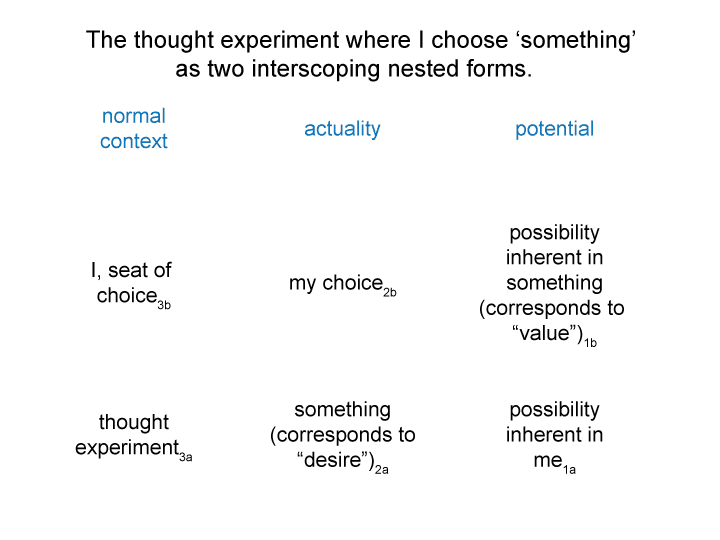
[Where does I, seat of choice3b take me?
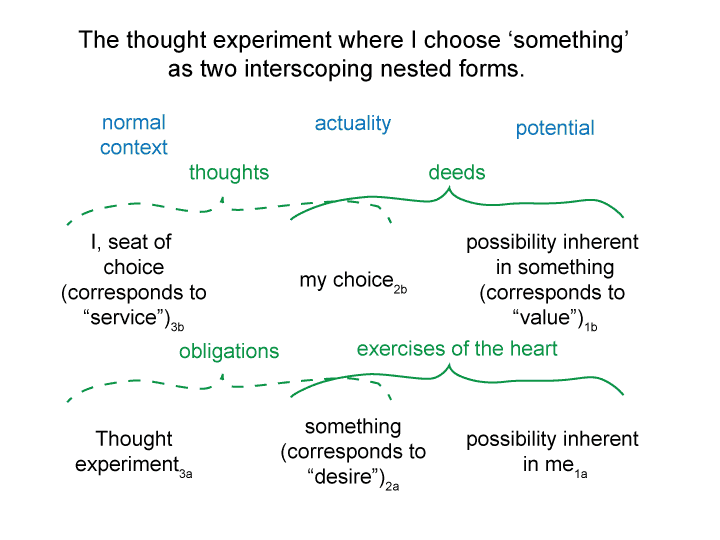
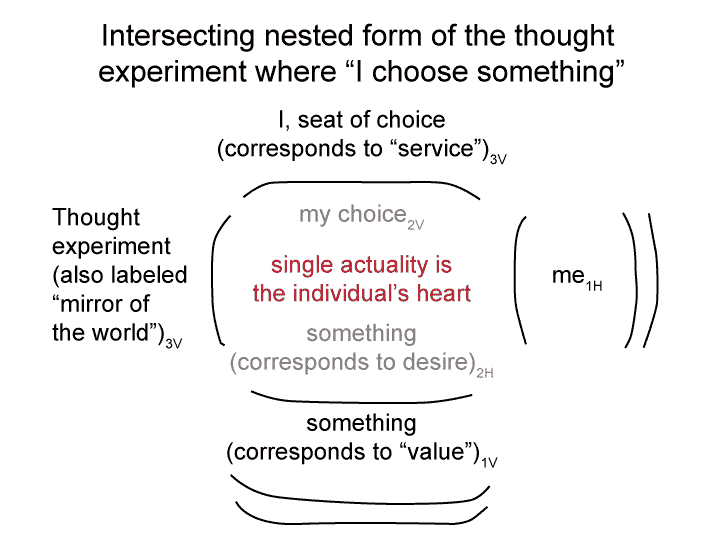
I, the seat of choice3b or perhaps, my heart2 determines the meaning of something1b. I3b guarantee that meaning1b
Plus, a message about something3b comes from me (my seat and my heart) when my choice has been made2b.]
Summary of text [comment] page 83
[In section 2.3, Schoonenberg discusses freedom.
My model for freedom is the thought experiment where ‘I choose something’.
So, I ask the question:
When I, the seat of choice chooses, do I choose a value?
If so, how does value link to the word ‘freedom’?]
Summary of text [comment] page 83
‘Freedom of will’ is implicit in the Scripture’s use of the word ‘heart’.
What comes from the heart?
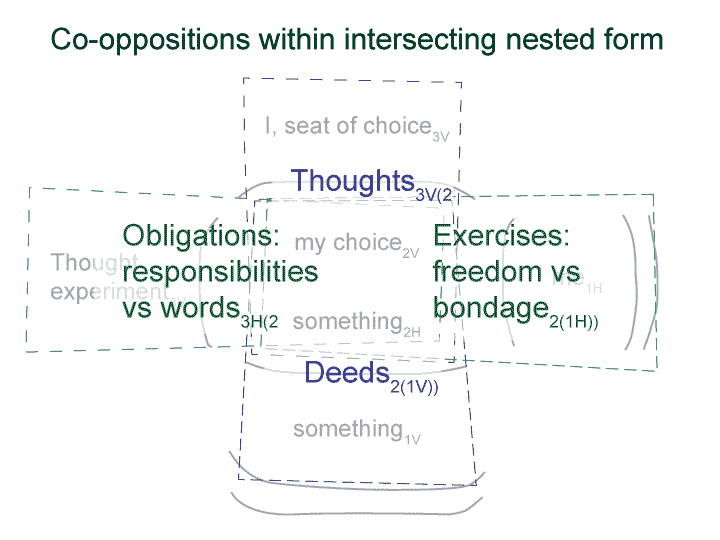
Thoughts, words and deeds come from the heart. Choice comes from the heart.
[Have we seen something like this before?]
Summary of text [comment] page 83
[The declaration, ‘I am not my sin.’, simultaneously evokes the question: Who am I?]