Man and Sin by Piet Schoonenberg (1964) 2.3 TL
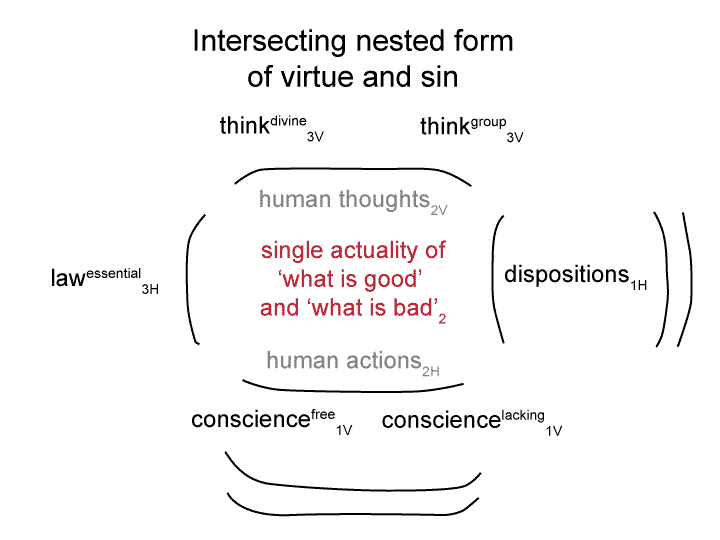
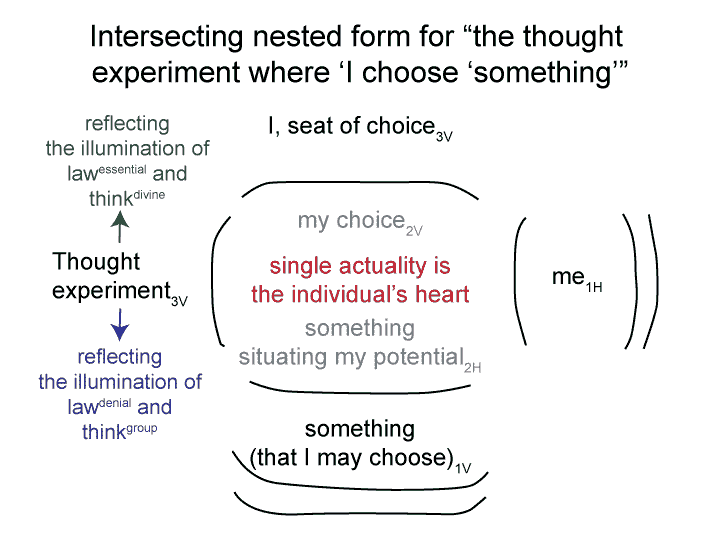
[If I can compare this nested form to the one derived from ‘the thought experiment where ‘I choose ‘something’‘ …
… then consciencespecified1V matches something1V in the potentials inherent in something that I may choose1V.
Something1V corresponds to value1V.]
Summary of text [comment] pages 83 and 84
[What is the categorical nature of this term “free will”?
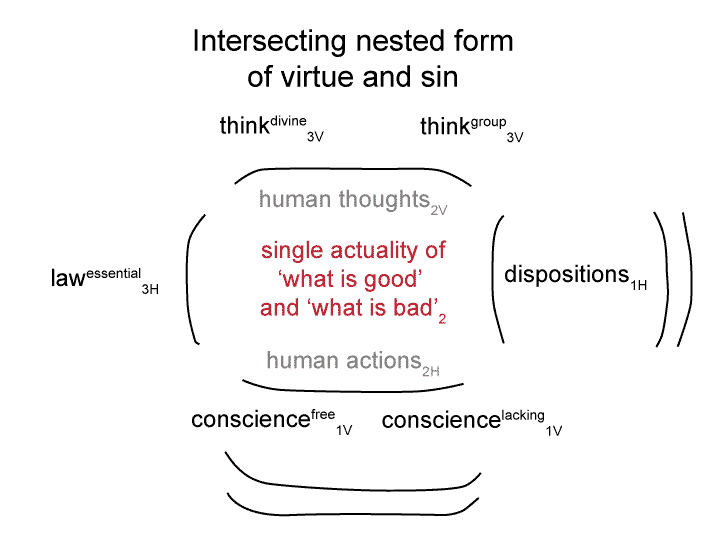
Consciencefree and conscienceunfree appear as competing potentials in the intersecting nested form that describes the message underlying the word, “religion”.
To me, these seem to correspond to the label “free will”.]
[The thought experiment where ‘I choose ‘something’ serves as a categorical tool for investigating Schoonenberg’s passage on responsibility and freedom.
What Schoonenberg expressed, the text itself, stands within the shell of Modernism.
What Schoonenberg was required to express as a Jesuit theologian included the husk of pre-modern Scholasticism.
Perhaps, only by dying in the cryptotheology of Modernism (with its complete fixation on the realm of actuality) and by cracking the coat of pre-modern Scholasticism (with its reliance on signs, without knowing ‘what signs are’), could this text germinate into an exercise in postmodern Scholasticism.]
Summary of text [comment] pages 83 and 84
[The imposition of the sovereign proceeds first, in words, then second, in unavoidable obligations.
Is it hard to see that words convey obligations?
I may use words in order to avoid obligations for me. But does that not amount to imposing the unavoidable on you?
Unlike responsibility, words have winners and losers, just like politics]
Summary of text [comment] pages 83 and 84
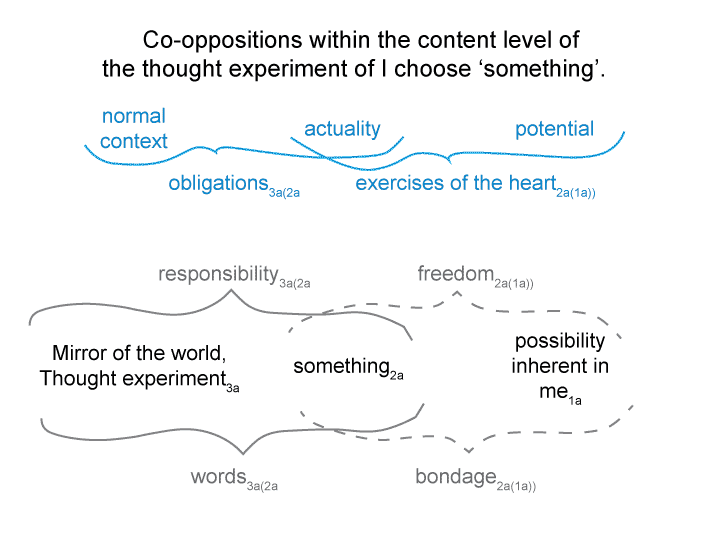
[IF the mirror of the world3a illuminates something2a that belongs to the potential inherent in me1a,
THEN responsibility3a(2a is co-opposed to freedom2a(1a)).]
Summary of text [comment] pages 83 and 84
[The co-opposition of responsibility and freedom allows us to appreciate Schoonenberg ‘s text more fully.
Schoonenberg’s key opposition is between bondage and freedom.
Bondage is in co-opposition with words (expressions and impositions of organizationalobjectives and thinkgroup).
Freedom is in co-opposition to responsibility.]